Category Archives: Prayer

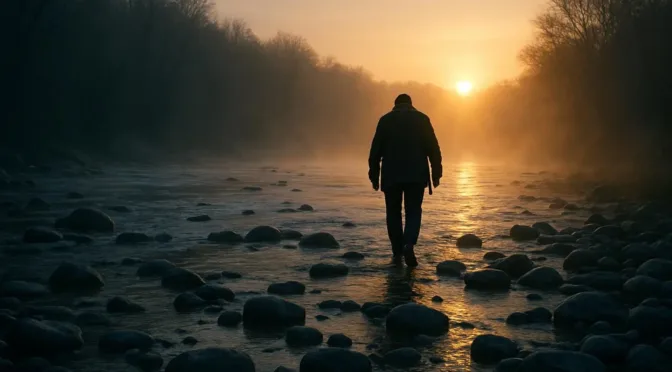
The Sun Rose as He Passed

The Blessing on the Other Side of the Night

The most important night of Jacob's life was spent alone in the dark, wrestling. He had sent everyone he loved across the river ahead of him, and when the camp was empty and the water was at his back, a man came and took hold of him, and the two of them struggled until the break of day (Genesis 32:24, NASB). The struggle held through every hour of the night, all the way to the first gray edge of morning.

When the man saw that he had not prevailed against Jacob, he touched the socket of his hip and threw it out of joint, and still Jacob would not release him. "Let me go, for the dawn is breaking," the man said. And Jacob answered out of his exhaustion and his pain, "I will not let You go unless You bless me" (Genesis 32:26, NASB). He was wounded now, and outmatched, and the night had cost him more than he expected. But he had decided that whatever this was, he would not loosen his grip before the light came.

Every praying believer knows something of that night. There are seasons when the room stays quiet no matter how long we pray. We know He is near, yet every sensible voice says to give up and try again tomorrow. Something deeper keeps saying, "Not yet." The ones who stay do not stay because they are winning. They stay because leaving without Him has become harder than waiting through another hour. And looking back, they rarely can say which prayer changed Heaven. They can only say those nights changed them.

Jacob had come to that same place, where turning back was no longer possible. When the man asked his name and he said it aloud, he was given another. "Your name shall no longer be Jacob, but Israel; for you have striven with God and with men, and have prevailed" (Genesis 32:28, NASB). Jacob means the one who grasps at the heel, the supplanter, the schemer who had spent his whole life taking by cunning what he could not receive by trust. That name came off him in the dark, and he walked away from the wrestling renamed.

Then comes the detail worth holding onto. "Now the sun rose upon him just as he crossed over Penuel, and he was limping on his thigh" (Genesis 32:31, NASB). The sun rose upon him. The daybreak he had held on for through every dark hour finally broke, and it broke over a changed man walking into a new day under a new name. He had wrestled his way from dusk to dawn, and the morning found him blessed. The light crowned the very struggle it ended.

There are nights meant for holding on. Some darkness asks more of you than patience. It asks for a grip that refuses to loosen, a prayer that will not release its promise, a heart that would rather limp into the sunrise than walk away unchanged. Wrestling until daybreak is not a sign that God has left you. It is often the place where He removes the name you carried into the night and gives you the one He always intended.

Prayer

Father, You did not run from Jacob in the dark. You let him hold on, and You blessed him as the morning broke. Give me the same refusal to let go of You before the light.

Jesus, You know what it is to pray through the night until the sweat falls like blood. When my own night is long, teach me to hold on to You and not to my own strength.

Holy Spirit, keep my grip from failing before the dawn. Hold me through the dark hours, and let the sun rise on a heart that would not let go.

I will not let You go, Lord, until the morning breaks and You bless me.


Continue at Freedom Worship Center:

Prayer – Our lifeline to the Father

Prayer is our lifeline to the Father. It is the line that never goes dead, no matter what the day holds.

Philippians 4:6-7 (NASB 1995) "Be anxious for nothing, but in everything by prayer and supplication with thanksgiving let your requests be made known to God. And the peace of God, which surpasses all comprehension, will guard your hearts and your minds in Christ Jesus."

Prayer, our lifeline to the Father

Prayer is Our Access to the Father

Hebrews 4:16 – "Therefore let us draw near with confidence to the throne of grace, so that we may receive mercy and find grace to help in time of need."

The word "confidence" here means boldness, freedom of speak freely. We don't approach God timidly, as though we might be rejected. Through Christ, we have been granted unrestricted access to our heavenly Father.

And we approach Him with the constant awareness that it is by His grace that we can come to Him boldly, with the faith to believe that we have been granted access to Him through His great love for us

Ephesians 3:12 – "In whom we have boldness and confident access through faith in Him."

This access was purchased at a tremendous cost. When Jesus cried out, "It is finished," the curtain separating the Holy of Holies was torn from top to bottom, God's own hand tearing open the way to Himself.

John 14:13-14 – "Whatever you ask in My name, that will I do, so that the Father may be glorified in the Son. If you ask Me anything in My name, I will do it."

Notice Jesus says "in My name," not as a magic formula, but because we now come as His representatives, clothed in His righteousness.

Application: Are you approaching God with the confidence He invites, or are you still standing outside, uncertain of your welcome? Begging for Him to do what He wants to do on our behalf, You are His child. Come boldly.

Our boldness to believe is what honors God the most

Prayer Aligns Us with God's Will

1 John 5:14-15 – "This is the confidence which we have before Him, that, if we ask anything according to His will, He hears us. And if we know that He hears us in whatever we ask, we know that we have the requests which we have asked from Him."

Prayer isn't about bending God's will to ours, but aligning our hearts with His. As we pray, the Holy Spirit transforms our desires.

There are specific topics I talk about with my kids, it is the things that they are excited about the things they are passionate about

If I try to cross the lines and bring in topics they have no connection to, you can see that you have lost them

When we talk to the Father, there are topics that He is passionate about as well, He is passionate about His will because His will represents all the good things He wants for us

When we come to truly realize that His will is for our best, we begin to pray the things He desires for us more than the things of this world that we have desired for so long

Romans 8:26-27 – "In the same way the Spirit also helps our weakness; for we do not know how to pray as we should, but the Spirit Himself intercedes for us with groanings too deep for words; and He who searches the hearts knows what the mind of the Spirit is, because He intercedes for the saints according to the will of God."

Even when we don't know what to pray, when words fail us in our pain or confusion, the Holy Spirit translates our deepest groans into perfect prayers before the Father.

Holy Spirit acts as our translator, think about that, while we are praying, Holy Spirit is speaking to the Father on our behalf to convey the proper message

Matthew 6:10 – Jesus taught us to pray, "Your kingdom come. Your will be done, on earth as it is in heaven."

Prayer changes us. We come with our agenda, and through communion with God, we leave with His purposes in our hearts. This is transformation, if that is what we are seeking through our prayers

Aligning ourselves with His will happens through humble prayer and obedience.

Prayer Cultivates Intimacy with God

1 Thessalonians 5:17 – "Pray without ceasing."

This doesn't mean constant verbal prayer, but living in continuous communion with God, a running conversation throughout your day. Practicing being in His presence throughout the day, knowing that is His design for you and Him, that is what Holy Spirit enables for us

Luke 5:16 – "But Jesus Himself would often slip away to the wilderness and pray."

If Jesus, the Son of God, needed dedicated prayer time with the Father, how much more do we? Prayer isn't just about asking for things, it's about relationship, our lifeline to the Father that keeps us close no matter how full life gets.

John 15:7 – "If you abide in Me, and My words abide in you, ask whatever you wish, and it will be done for you."

Abiding comes first. When we remain in constant connection with Christ, our prayers flow from that intimacy. We begin to want the very same things that He wants.

Philippians 3:10 – Paul's great desire: "That I may know Him and the power of His resurrection and the fellowship of His sufferings."

Prayer is the pathway to knowing God deeply. Not just knowing about Him, but knowing Him personally and experientially.

Application: Is your prayer life primarily about getting things from God, or about getting more of God Himself?

Embracing the Gift: Our Lifeline to the Father

Prayer is God's gift to His children, our lifeline to the Father that provides access, peace, power, alignment with His will, and intimate relationship. Yet how often do we neglect this gift? We live prayerless days, carry unnecessary burdens, and miss the joy of communion with our Father.

1 Timothy 2:8 – "Therefore I want the men in every place to pray, lifting up holy hands, without wrath and dissension."

Prayer should mark every place we inhabit, our homes, our workplaces, our churches.

Colossians 4:2 – "Devote yourselves to prayer, keeping alert in it with an attitude of thanksgiving."

The word "devote" means to persist, to be steadfast. Prayer requires commitment, but the rewards are immeasurable.

Closing

When I transitioned into the role of Pastor, God had already given me the top 3 priorities to work on in the church

The top of that list was prayer, our lifeline to the Father that everything else in ministry depends on.

His house is to be known as a house of prayer, look at how many times it is said in His word

Matthew 21:13 – 13 And He said to them, "It is written, 'My house shall be called a house of prayer'; but you are making it a robbers' den."

Isaiah 56:7 – 7 Even those I will bring to My holy mountain And make them joyful in My house of prayer. Their burnt offerings and their sacrifices will be acceptable on My altar; For My house will be called a house of prayer for all the peoples."

Mark 11:17 – 17 And He began to teach and say to them, "Is it not written, 'My house shall be called a house of prayer for all the nations'? But you have made it a robbers' den."

Luke 19:46 – 46 saying to them, "It is written, 'And My house shall be a house of prayer,' but you have made it a robbers' den."


Continue at Freedom Worship Center:

The Second Great Awakening: A Fire of Renewal 

In the early 1800s, America was a nation in transition, grappling with rapid social, economic, and territorial changes. Amid this turbulence, a fire of spiritual renewal swept across the land, known as the Second Great Awakening. This revival profoundly shaped the spiritual and social fabric of the United States, leaving a legacy that resonates even today.

Unlike the localized revivals of earlier movements, the Second Great Awakening spread across vast regions, from rural camp meetings in Kentucky to urban churches in New England. At its core was a call to repentance, a renewed focus on salvation, and a fervent desire to see lives and communities transformed by the power of the Gospel. However, not every region welcomed this fire of spiritual renewal with open arms. Worcester, Massachusetts, for instance, became known for its resistance to revivalist preachers, reflecting a tension between traditional rationalist views and the emotional fervor of revivalist preaching.

A Movement Rooted in Prayer

The Second Great Awakening began quietly in small gatherings of believers who sought God through persistent prayer. In rural areas, Christians met in homes and barns, crying out for a fire of spiritual renewal. These gatherings often sparked larger meetings, where preachers would proclaim the Gospel with urgency and zeal.

This aligns with the biblical principle found in 2 Chronicles 7:14: "If My people, who are called by My name, humble themselves, and pray and seek My face and turn from their wicked ways, then I will hear them from heaven and forgive their sin and heal their land" (AMP). The awakening began with humble hearts seeking God, and He responded mightily, igniting a fire of spiritual renewal that could not be extinguished.

Even in places like Worcester, where resistance to revivalism was strong due to the dominance of Unitarian and rationalist influences, prayer and persistence paved the way for the spread of this fire of spiritual renewal in surrounding areas. Though some preachers were kept out, the flames of the revival could not be contained entirely.

Camp Meetings and Fiery Preaching

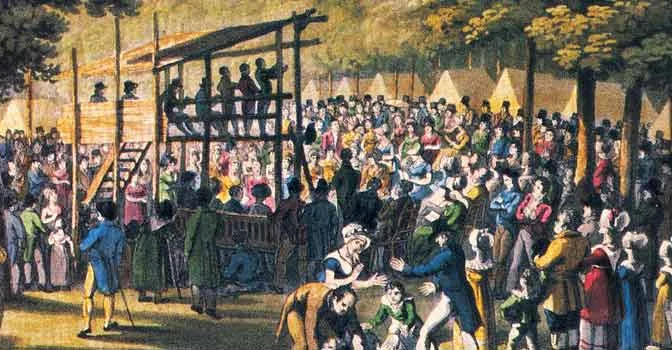
One of the hallmarks of the Second Great Awakening was the rise of camp meetings, especially in the frontier regions of Kentucky and Tennessee. These outdoor gatherings often lasted for days, drawing thousands of people hungry for a fire of spiritual renewal. Preachers like James McGready and Barton Stone delivered passionate sermons, calling sinners to repentance and believers to deeper faith.

These meetings reflected the urgency of Romans 10:14: "How then will they call on Him in whom they have not believed? And how will they believe in Him of whom they have not heard? And how will they hear without a preacher?" (AMP). The preaching in these settings brought the message of salvation to countless people who might not have heard it otherwise, fueling the fire of spiritual renewal.

In contrast, urban centers like Worcester resisted the emotional style of camp meetings. Many viewed such gatherings as disruptive and overly emotional. This resistance, however, highlights the cultural and spiritual battle lines drawn during the awakening, as revivalists sought to spread the fire of spiritual renewal to both the spiritually complacent and the unchurched.

A New Emphasis on Personal Responsibility

The Second Great Awakening differed from earlier revivals in its emphasis on personal responsibility in responding to the Gospel. Preachers like Charles Finney, who became a leading figure in the movement, stressed that individuals could make the choice to repent and follow Christ. Finney's "new measures" included altar calls and public invitations for people to come forward and commit their lives to Christ.

Finney's theology aligned with the call in Acts 3:19: "So repent [change your inner self, your old way of thinking] and return [to God], so that your sins may be wiped away, [blotted out, completely erased], so that times of refreshing may come from the presence of the Lord" (AMP). His sermons stirred hearts and made repentance accessible to all, igniting a fire of spiritual renewal even in areas where resistance to change remained strong.

Impact on Society

The Second Great Awakening extended beyond personal salvation to societal transformation. It inspired the establishment of missionary societies, Sunday schools, and Bible distribution efforts. It also played a significant role in major social reform movements, including abolition, women's rights, and temperance. Believers, transformed by the Gospel, sought to live out their faith by addressing injustices and meeting the needs of their communities. This fire of spiritual renewal burned brightly, leading to tangible changes in society.

Even in Worcester, where revivalists faced barriers, the awakening's emphasis on social reform found traction. Organizations aimed at combating slavery and supporting education reflected the broader influence of this revivalist wave. The fire of spiritual renewal was not confined to revival meetings but extended into every corner of American life.

This revival demonstrated that true faith is not confined to private worship but influences the public sphere. As James 2:26 reminds us, "For just as the body without the spirit is dead, so also faith without works is dead" (AMP).

A Legacy of Renewal

By the mid-19th century, the Second Great Awakening had touched every corner of American society. Entire towns and cities were transformed as individuals came to faith, churches grew, and believers sought to live out the Gospel in every aspect of their lives. Even in places like Worcester, where resistance to revival was strong, the movement's influence could not be ignored.

The awakening's emphasis on prayer, preaching, personal responsibility, and societal change continues to inspire Christians today. It reminds us that revival begins when ordinary people, filled with the Spirit, seek God with all their hearts and proclaim His truth boldly, spreading a fire of spiritual renewal wherever they go.

Prayer for Awakening

Heavenly Father, we thank You for the testimony of the Second Great Awakening and the lives transformed through prayer, repentance, and bold preaching. Stir our hearts to seek You with that same passion today. Let Your Spirit move in our homes, churches, and communities, bringing a fire of spiritual renewal that glorifies You and transforms lives. In Jesus' name, Amen.

See Also

Northampton Revival: Prayer Ignites Transformation

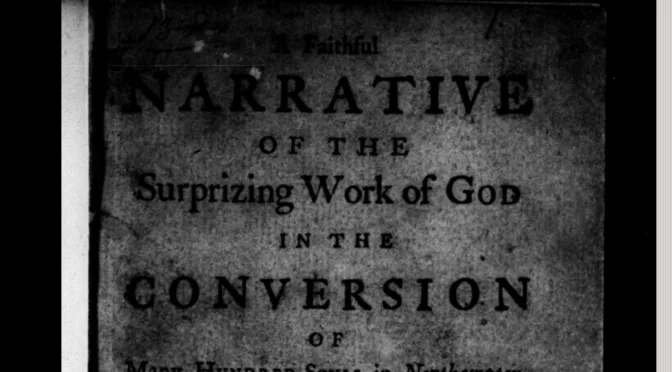
[The referenced book in this article is available online in its entirety here: https://ccel.org/ccel/edwards/works1/works1.viii.html or https://archive.org/details/bim_eighteenth-century_a-faithful-narrative-of-_edwards-jonathan_1737]

In 1734, in the quiet town of Northampton, Massachusetts, a remarkable work of God began under the ministry of Jonathan Edwards, a young preacher devoted to the truth of Scripture. What unfolded in the following months became one of the most extraordinary revivals in American history, transforming Northampton and sparking a movement that laid the foundation for the First Great Awakening.

Jonathan Edwards documented this revival in A Narrative of Surprising Conversions, capturing how God's Spirit moved unexpectedly and powerfully. The revival began with Edwards' faithful preaching of the Gospel, particularly his sermons on justification by faith and the beauty of Christ. These messages deeply convicted his congregation, awakening them to their sin and desperate need for a Savior.

A Spark from Small Beginnings

The revival was ignited by the transformation of a few young people in the town who had been known for their worldly and careless ways. These individuals experienced dramatic conversions and began to gather in small prayer groups, seeking God fervently and encouraging one another to grow in faith. Their changed lives stirred curiosity and conviction in others, leading to a ripple effect throughout the community.

Edwards wrote, "The Spirit of God began extraordinarily to set in, and wonderfully to work among us." The prayers of these small groups, often held in homes and fields, became a powerful force for revival. The sense of God's presence became so tangible that it drew people into deeper personal worship and prayer.

A Community Transformed

By the winter of 1734-1735, the entire town of Northampton was gripped by a spiritual awakening. People of all ages and walks of life began to experience a profound awareness of their sin and the beauty of salvation in Christ. Edwards described how the town became "full of the presence of God," with conversations in homes, shops, and streets centered on eternal matters.

Small prayer gatherings multiplied, and church services became packed with people weeping under conviction and crying out for God's mercy. Edwards noted how entire families were transformed, with parents and children praying together and neighbors reconciling longstanding disputes. Within six months, nearly 300 people, about a quarter of Northampton's population, professed faith in Christ.

This revival wasn't marked by emotional excess but by genuine, heart-deep transformation. Edwards observed, "There was scarcely a single person in town, either old or young, left unconcerned about the great things of the eternal world."

The Role of Small Prayer Groups

A distinctive feature of this revival was the importance of small prayer gatherings. These groups fostered intimacy, accountability, and a shared hunger for God's presence. They became places where believers encouraged one another and interceded for their neighbors. Edwards recognized these prayer meetings' role in sustaining the revival, writing that they kept the flame of spiritual fervor alive long after the initial spark.

This pattern of revival, beginning with a few who pray, aligns with biblical principles. In the early church, revival broke out at Pentecost after believers "were continually devoting themselves to prayer" (Acts 1:14, AMP). Similarly, God used small, humble gatherings in Northampton to create a movement that transformed an entire town.

Ripples Beyond Northampton

The revival in Northampton didn't stop there. The spiritual awakening spread to neighboring towns and eventually inspired preachers like George Whitefield and others, who carried the revival fire across New England and beyond. This wave of spiritual renewal became a key catalyst for the broader First Great Awakening, which swept through the colonies and led to widespread repentance, church growth, and a renewed sense of dependence on God.

Lessons for Today

The Northampton Revival offers timeless insights into how God moves:

1. The Power of Persistent Prayer

Small prayer groups, like those in Northampton, are the backbone of revival. Their prayers invite God's Spirit to move and transform lives. "If My people… humble themselves, and pray and seek My face… then I will hear them from heaven" (2 Chronicles 7:14, AMP).

2. Faithful Preaching of the Gospel

Edwards' focus on the cross, repentance, and the beauty of Christ reminds us that revival begins when God's Word is boldly proclaimed. "For I determined to know nothing among you except Jesus Christ, and Him crucified" (1 Corinthians 2:2, AMP).

3. The Role of Unity and Obedience

Small groups brought people together, fostering unity and accountability. Revival flourishes where believers are unified in their pursuit of God's will. "Behold, how good and how pleasant it is for brothers to dwell together in unity!" (Psalm 133:1, AMP).

4. Genuine Repentance Produces Transformation

Revival leads to lasting change, both individually and in the broader community. Families were restored, relationships reconciled, and society changed as the Gospel took root in people's hearts.

A Spark for Our Time

The Northampton Revival reminds us that God often moves through small beginnings. Just as He used a few young people and their prayer gatherings to ignite a movement in 1734, He can do the same today. Revival begins when ordinary people humble themselves, seek God in prayer, and proclaim His truth boldly.

Prayer for Revival

Heavenly Father, we thank You for the testimony of the Northampton Revival and the way You moved through small prayer gatherings to transform lives. Stir our hearts to seek You with the same fervency and devotion. Help us to gather in prayer, preach Your Word faithfully, and hunger for Your presence. Pour out Your Spirit upon us, and let revival start in our hearts and spread to our communities. In Jesus' name, Amen.

See Also