Tag Archives: Prayer

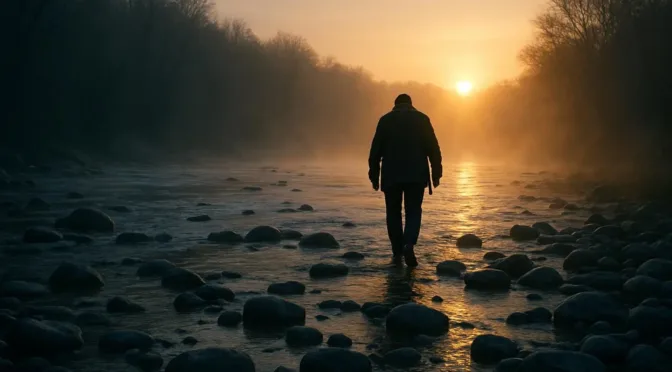
The Sun Rose as He Passed

The Blessing on the Other Side of the Night

The most important night of Jacob's life was spent alone in the dark, wrestling. He had sent everyone he loved across the river ahead of him, and when the camp was empty and the water was at his back, a man came and took hold of him, and the two of them struggled until the break of day (Genesis 32:24, NASB). The struggle held through every hour of the night, all the way to the first gray edge of morning.

When the man saw that he had not prevailed against Jacob, he touched the socket of his hip and threw it out of joint, and still Jacob would not release him. "Let me go, for the dawn is breaking," the man said. And Jacob answered out of his exhaustion and his pain, "I will not let You go unless You bless me" (Genesis 32:26, NASB). He was wounded now, and outmatched, and the night had cost him more than he expected. But he had decided that whatever this was, he would not loosen his grip before the light came.

Every praying believer knows something of that night. There are seasons when the room stays quiet no matter how long we pray. We know He is near, yet every sensible voice says to give up and try again tomorrow. Something deeper keeps saying, "Not yet." The ones who stay do not stay because they are winning. They stay because leaving without Him has become harder than waiting through another hour. And looking back, they rarely can say which prayer changed Heaven. They can only say those nights changed them.

Jacob had come to that same place, where turning back was no longer possible. When the man asked his name and he said it aloud, he was given another. "Your name shall no longer be Jacob, but Israel; for you have striven with God and with men, and have prevailed" (Genesis 32:28, NASB). Jacob means the one who grasps at the heel, the supplanter, the schemer who had spent his whole life taking by cunning what he could not receive by trust. That name came off him in the dark, and he walked away from the wrestling renamed.

Then comes the detail worth holding onto. "Now the sun rose upon him just as he crossed over Penuel, and he was limping on his thigh" (Genesis 32:31, NASB). The sun rose upon him. The daybreak he had held on for through every dark hour finally broke, and it broke over a changed man walking into a new day under a new name. He had wrestled his way from dusk to dawn, and the morning found him blessed. The light crowned the very struggle it ended.

There are nights meant for holding on. Some darkness asks more of you than patience. It asks for a grip that refuses to loosen, a prayer that will not release its promise, a heart that would rather limp into the sunrise than walk away unchanged. Wrestling until daybreak is not a sign that God has left you. It is often the place where He removes the name you carried into the night and gives you the one He always intended.

Prayer

Father, You did not run from Jacob in the dark. You let him hold on, and You blessed him as the morning broke. Give me the same refusal to let go of You before the light.

Jesus, You know what it is to pray through the night until the sweat falls like blood. When my own night is long, teach me to hold on to You and not to my own strength.

Holy Spirit, keep my grip from failing before the dawn. Hold me through the dark hours, and let the sun rise on a heart that would not let go.

I will not let You go, Lord, until the morning breaks and You bless me.


Continue at Freedom Worship Center:

What They Would Tell Us Now

Voices from the Church Across the Centuries

The Church has walked through many ages. Kingdoms have risen and fallen. Cathedrals have been built and abandoned. Revivals have burned brightly and then faded into memory. Entire movements once filled with holy fire eventually became systems men learned to manage.

Yet through every century, God has always preserved a people who longed for more than religion.

Not perfect people.
Not powerful people.
Hungry people.

Again and again throughout history, believers became dissatisfied with outward forms that no longer carried inward life. They began searching once more for the presence of God Himself. Sometimes they gathered in homes. Sometimes in caves, fields, monasteries, barns, or broken-down buildings. Sometimes they prayed in silence. Sometimes they cried aloud through the night. But beneath all their differences was the same holy ache:

We do not want church without Him.

And if those believers could speak to us now, they would not tell us to copy their structures. They would not ask us to recreate their clothing, traditions, or denominations. They would warn us instead about the dangers they discovered and remind us what mattered most when God drew near.

The early believers in Jerusalem would likely speak first.

A trembling old disciple might lean forward and say:

"We gathered before sunrise because we could not wait to see one another again. We prayed because we needed Him. We gathered because we loved Him. Jesus Himself had become our life. We had no buildings to defend and no reputation to maintain. We only had Him. Do not replace dependence with professionalism. Christ among His people is still the treasure."

The desert fathers would nod quietly beside him.

These men fled into the wilderness when Christianity became respectable within the Roman Empire. They feared gaining the world while losing the fear of God. An old monk with weathered hands might say:

"Silence is not emptiness. It is where the noise dies so you can hear God again. Flee the need to appear spiritual. Let your hidden life become greater than your visible life. The soul that learns to sit quietly before God becomes a dwelling place for peace."

Then perhaps a Celtic missionary from the windswept shores of Iona would smile gently.

Smoke still clings to his cloak from countless hearth fires.

He would say:

"The presence of God does not live only in sanctuaries. He walks the fields. He fills kitchens. He meets weary travelers on muddy roads. Bless the ordinary places again. Teach your homes to pray. The fire must return to the table, not only the stage."

Across the centuries, a Moravian elder from Herrnhut might step forward next. He remembers the tears of reconciliation before the prayer meetings began to burn day and night. He remembers believers confessing sin to one another and choosing love over division. His voice would carry certainty born from experience:

"Unity is not organizational agreement. It is hearts melted together before the Lamb. We stopped defending ourselves and began confessing, forgiving, and praying together. Then the Holy Spirit came near. Prayer is not preparation for the work. Prayer is the work."

Then the room would grow quieter still.

A Quaker woman in plain clothes might barely raise her voice above a whisper:

"You speak too quickly. Wait before the Lord. Let Him interrupt the meeting. Let Him break the schedule. A gathering should not be remembered because people spoke much, but because God was near."

Many in the modern Church would struggle with her words.

We have mastered production.
We have mastered branding.
We have mastered presentation.

But we often do not know how to wait.

We fear silence because silence exposes whether God is truly among us or whether we are sustaining momentum ourselves.

Then from Wales, Evan Roberts might rise with fire still in his eyes.

The Welsh Revival was not born from polished sermons or strategic planning. It was born from brokenness, repentance, and yielded hearts. Roberts would likely look directly at us and say:

"Bend quickly when the Spirit convicts you. Do not leave coals buried beneath the ash. Confess sin plainly. Obey immediately. The presence of God moves like fire through dry grass when hearts stop resisting Him. Revival is when God becomes more real than everything else."

And then William Seymour from Azusa Street would speak.

Not from a grand cathedral.
Not from a platform of celebrity.
But from rough wooden floors where believers prayed until pride broke and heaven came near.

He would warn us carefully:

"Stay low. The Spirit falls on surrendered people, not impressive people. We prayed together on rough floors because we were hungry for God, not because anyone was watching. Protect humility more fiercely than giftedness. Once men touch the glory for themselves, the fire begins to fade."

The tragedy is not that churches become imperfect.
Every church has always been imperfect.

The tragedy is when believers learn how to continue without the presence of God and no longer notice the difference.

This is why these voices matter.

Not because history itself is holy.
Not because old movements should be idolized.
But because they remind us what we keep forgetting.

God still desires to dwell among His people.

And perhaps above them all, the aged apostle John would finally lean close to us and speak one last time:

"Little children, love Him more than the works done for Him. Remain near to Jesus. Do not build churches where His name is sung but His presence is no longer desired. He still walks among the lampstands. He still stands at the door and knocks. Open quickly."


Continue Reading: Voices of Revival

The believers above are not distant legends — their stories are worth knowing in full. Explore the moves of God that shaped them:

Prayer – Our lifeline to the Father

Prayer is our lifeline to the Father. It is the line that never goes dead, no matter what the day holds.

Philippians 4:6-7 (NASB 1995) "Be anxious for nothing, but in everything by prayer and supplication with thanksgiving let your requests be made known to God. And the peace of God, which surpasses all comprehension, will guard your hearts and your minds in Christ Jesus."

Prayer, our lifeline to the Father

Prayer is Our Access to the Father

Hebrews 4:16 – "Therefore let us draw near with confidence to the throne of grace, so that we may receive mercy and find grace to help in time of need."

The word "confidence" here means boldness, freedom of speak freely. We don't approach God timidly, as though we might be rejected. Through Christ, we have been granted unrestricted access to our heavenly Father.

And we approach Him with the constant awareness that it is by His grace that we can come to Him boldly, with the faith to believe that we have been granted access to Him through His great love for us

Ephesians 3:12 – "In whom we have boldness and confident access through faith in Him."

This access was purchased at a tremendous cost. When Jesus cried out, "It is finished," the curtain separating the Holy of Holies was torn from top to bottom, God's own hand tearing open the way to Himself.

John 14:13-14 – "Whatever you ask in My name, that will I do, so that the Father may be glorified in the Son. If you ask Me anything in My name, I will do it."

Notice Jesus says "in My name," not as a magic formula, but because we now come as His representatives, clothed in His righteousness.

Application: Are you approaching God with the confidence He invites, or are you still standing outside, uncertain of your welcome? Begging for Him to do what He wants to do on our behalf, You are His child. Come boldly.

Our boldness to believe is what honors God the most

Prayer Aligns Us with God's Will

1 John 5:14-15 – "This is the confidence which we have before Him, that, if we ask anything according to His will, He hears us. And if we know that He hears us in whatever we ask, we know that we have the requests which we have asked from Him."

Prayer isn't about bending God's will to ours, but aligning our hearts with His. As we pray, the Holy Spirit transforms our desires.

There are specific topics I talk about with my kids, it is the things that they are excited about the things they are passionate about

If I try to cross the lines and bring in topics they have no connection to, you can see that you have lost them

When we talk to the Father, there are topics that He is passionate about as well, He is passionate about His will because His will represents all the good things He wants for us

When we come to truly realize that His will is for our best, we begin to pray the things He desires for us more than the things of this world that we have desired for so long

Romans 8:26-27 – "In the same way the Spirit also helps our weakness; for we do not know how to pray as we should, but the Spirit Himself intercedes for us with groanings too deep for words; and He who searches the hearts knows what the mind of the Spirit is, because He intercedes for the saints according to the will of God."

Even when we don't know what to pray, when words fail us in our pain or confusion, the Holy Spirit translates our deepest groans into perfect prayers before the Father.

Holy Spirit acts as our translator, think about that, while we are praying, Holy Spirit is speaking to the Father on our behalf to convey the proper message

Matthew 6:10 – Jesus taught us to pray, "Your kingdom come. Your will be done, on earth as it is in heaven."

Prayer changes us. We come with our agenda, and through communion with God, we leave with His purposes in our hearts. This is transformation, if that is what we are seeking through our prayers

Aligning ourselves with His will happens through humble prayer and obedience.

Prayer Cultivates Intimacy with God

1 Thessalonians 5:17 – "Pray without ceasing."

This doesn't mean constant verbal prayer, but living in continuous communion with God, a running conversation throughout your day. Practicing being in His presence throughout the day, knowing that is His design for you and Him, that is what Holy Spirit enables for us

Luke 5:16 – "But Jesus Himself would often slip away to the wilderness and pray."

If Jesus, the Son of God, needed dedicated prayer time with the Father, how much more do we? Prayer isn't just about asking for things, it's about relationship, our lifeline to the Father that keeps us close no matter how full life gets.

John 15:7 – "If you abide in Me, and My words abide in you, ask whatever you wish, and it will be done for you."

Abiding comes first. When we remain in constant connection with Christ, our prayers flow from that intimacy. We begin to want the very same things that He wants.

Philippians 3:10 – Paul's great desire: "That I may know Him and the power of His resurrection and the fellowship of His sufferings."

Prayer is the pathway to knowing God deeply. Not just knowing about Him, but knowing Him personally and experientially.

Application: Is your prayer life primarily about getting things from God, or about getting more of God Himself?

Embracing the Gift: Our Lifeline to the Father

Prayer is God's gift to His children, our lifeline to the Father that provides access, peace, power, alignment with His will, and intimate relationship. Yet how often do we neglect this gift? We live prayerless days, carry unnecessary burdens, and miss the joy of communion with our Father.

1 Timothy 2:8 – "Therefore I want the men in every place to pray, lifting up holy hands, without wrath and dissension."

Prayer should mark every place we inhabit, our homes, our workplaces, our churches.

Colossians 4:2 – "Devote yourselves to prayer, keeping alert in it with an attitude of thanksgiving."

The word "devote" means to persist, to be steadfast. Prayer requires commitment, but the rewards are immeasurable.

Closing

When I transitioned into the role of Pastor, God had already given me the top 3 priorities to work on in the church

The top of that list was prayer, our lifeline to the Father that everything else in ministry depends on.

His house is to be known as a house of prayer, look at how many times it is said in His word

Matthew 21:13 – 13 And He said to them, "It is written, 'My house shall be called a house of prayer'; but you are making it a robbers' den."

Isaiah 56:7 – 7 Even those I will bring to My holy mountain And make them joyful in My house of prayer. Their burnt offerings and their sacrifices will be acceptable on My altar; For My house will be called a house of prayer for all the peoples."

Mark 11:17 – 17 And He began to teach and say to them, "Is it not written, 'My house shall be called a house of prayer for all the nations'? But you have made it a robbers' den."

Luke 19:46 – 46 saying to them, "It is written, 'And My house shall be a house of prayer,' but you have made it a robbers' den."


Continue at Freedom Worship Center:

Common Threads in Revival: What Causes It and Sustains It

Analyzing the revivals covered in these articles, The Northampton Revival, The Second Great Awakening, The Welsh Revival, The Azusa Street Revival, The Moravian Revival, and The Hebrides Revival, reveals consistent principles that ignite revival and sustain its effects. Across history, while each revival is unique, there are striking similarities in the way God moves among His people and what is required to sustain His work. Here's an overview:

What Causes Revival?

1. Fervent, Persistent Prayer

Every revival began with a small group of believers who were deeply committed to prayer. Whether it was the elderly sisters of the Hebrides, the prayer groups in Northampton, or the 100-year prayer chain of the Moravians, prayer was the catalyst that invited God's Spirit to move. This aligns with the promise of 2 Chronicles 7:14: "If My people… humble themselves, and pray and seek My face…".

  • Prayer was not casual or secondary; it was desperate, persistent, and often around-the-clock. Revival begins when God's people take Him at His Word and cry out for His presence.

2. Hunger for God and Holiness

A deep hunger for God and a recognition of spiritual need were present in all these revivals. Leaders and participants felt burdened by sin and spiritual apathy, which drove them to repentance and a renewed pursuit of holiness. Revival occurs when people acknowledge their dependence on God and desire His righteousness above all else.

  • Psalm 24:3-4 was central in many movements: "Who may ascend onto the mountain of the Lord?… He who has clean hands and a pure heart."

3. Unity Among Believers

Disunity hinders revival. Before the Moravian Revival began, the fractured Herrnhut community reconciled their differences and committed to love and unity. Similarly, the Welsh Revival transcended denominational lines, and Azusa Street broke racial and social barriers.

  • Revival often comes after believers humble themselves, forgive one another, and commit to unity. Psalm 133:1 reminds us: "Behold, how good and how pleasant it is for brothers to dwell together in unity!"

4. Bold, Spirit-Led Preaching

In nearly every revival, Spirit-filled preaching played a pivotal role. Jonathan Edwards' sermons in Northampton, Charles Finney's bold messages during the Second Great Awakening, and Duncan Campbell's Spirit-led preaching in the Hebrides deeply convicted hearts. These messages focused on repentance, salvation, and the beauty of Christ.

  • Preaching that relies on the Holy Spirit rather than human wisdom pierces hearts. 1 Corinthians 2:4: "My message and my preaching were not in persuasive words of wisdom, but in demonstration of the Spirit and of power."

5. The Sovereignty of God

A common thread is the undeniable sovereignty of God in revival. While prayer, preaching, and unity are important, revival ultimately happens because God chooses to move. His Spirit brings conviction and transformation, often in ways no one can predict or control.

  • This is especially evident in movements like the Hebrides Revival, where people were convicted spontaneously, even in fields or workplaces.

What Sustains Revival?

Common threads in revival: believers gathered in prayer and unity

1. Continuous Prayer

Revival cannot last without persistent prayer. The Moravian Revival's 100-year prayer chain illustrates this perfectly. Similarly, in the Hebrides, prayer meetings continued nightly, fueling the ongoing work of the Spirit.

  • Revival fades when God's people stop seeking Him. Prayer keeps hearts tender and focused on God's mission. 1 Thessalonians 5:17: "Pray without ceasing."

2. Commitment to Holiness and Repentance

Revivals that lasted emphasized personal holiness and ongoing repentance. The Welsh Revival, for example, stressed confession of sin and obedience to the Holy Spirit. Sustained revival requires believers to remain vigilant against sin and continually seek God's sanctifying work.

  • 1 Peter 1:16: "Be holy, because I am holy."

3. A Missional Mindset

Revivals that endure often produce a strong missionary impulse. The Moravian Revival birthed global missions, and the Azusa Street Revival sent missionaries worldwide. When believers focus outward, sharing the Gospel and serving others, the revival spirit continues.

  • Revival that turns inward or becomes self-serving will fade. Jesus' command in Matthew 28:19 to "Go therefore and make disciples of all the nations" remains central.

4. Unity in the Body of Christ

Division quenches revival. Revivals that lasted fostered unity among believers, often transcending denominational, racial, or social boundaries. The Azusa Street Revival exemplified this unity, with people from all backgrounds worshiping together.

  • Sustained revival requires believers to maintain humility, love, and unity. Ephesians 4:3: "Make every effort to keep the unity of the Spirit through the bond of peace."

5. God-Dependent Leadership

Revivals are often sparked by humble leaders who point people to God, not themselves. William J. Seymour (Azusa Street) and Duncan Campbell (Hebrides) were examples of leaders who emphasized the sovereignty of God and the work of the Holy Spirit, not their own efforts.

  • Revival fades when leaders seek personal glory or rely on human strategies rather than the Spirit. Zechariah 4:6: "Not by might, nor by power, but by My Spirit," says the Lord of hosts.

Summary: The Causes and Continuation of Revival

What Causes Revival?

  • Persistent, fervent prayer.
  • Hunger for God and holiness.
  • Unity among believers.
  • Spirit-filled preaching.
  • God's sovereign work.

What Sustains Revival?

  • Continuous prayer and intercession.
  • Ongoing repentance and pursuit of holiness.
  • A missional focus to spread the Gospel.
  • Unity and humility within the church.
  • God-centered leadership that depends on the Spirit.

A Final Call to Seek Revival

The consistent threads across these historical revivals remind us that revival is both a gift from God and a response to the faithfulness of His people. Prayer, repentance, unity, and a commitment to His mission prepare the soil, but it is the Spirit of God who brings the harvest. As we look to these past movements of God, may we be inspired to seek His face and pray for a fresh outpouring of His Spirit in our time.

Prayer

Heavenly Father,

We come before You with humble hearts, seeking Your face. We long for Your presence to fill our lives, our churches, and our communities. Forgive us, Lord, for the sins that have kept us from You, cleanse our hearts and make us holy.

Stir within us a deep hunger to know You more and to walk in Your ways. Unite us as Your people, casting aside divisions, so that we may glorify You together. We ask for a fresh outpouring of Your Spirit, Lord. Please come and move among us as You have in the past. Let Your glory fall, and may revival begin in our hearts today.

In Jesus' name, we pray, Amen.

See Also